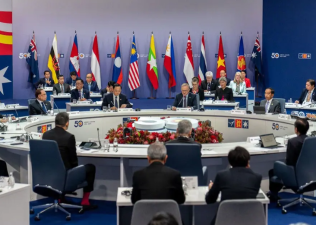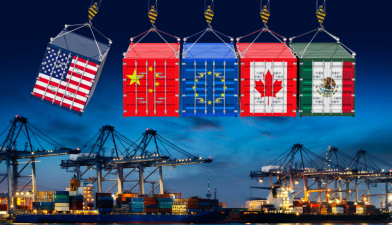
Geopolitical tensions, the need for supply chain resilience, and technological competition have collectively driven the reshaping of the trade landscape. In recent years, global trade networks have undergone profound restructuring, with geopolitical factors becoming a core driving force behind this change. According to a 2025 update report by the McKinsey Global Institute, trade relations among major economies continue to adjust, and the "geometric structure" of trade flows exhibits significant regionalization and diversification. Geopolitics profoundly influences global trade flows by reshaping political relations, security considerations, and economic alliances between nations. In recent years, geopolitical conflicts, the impact of the pandemic, and policies prioritizing economic security have prompted countries to reassess their trading partners, leading to a reorganization of trade networks along geopolitical lines.
-
-
New global trade rules are reshaping the international economic landscape, primarily manifested in the implementation of regional trade agreements, adjustments to export control policies, and the alignment of high-standard trade rules. The restructuring of international trade rules is essentially a game between developed and emerging economies, a struggle for the right to set trade rules. The global trading system has just experienced one of the most transformative years of the past century and is now entering a new phase that poses greater challenges to stability and growth. Despite US President Donald Trump's efforts to erect tariff barriers around the US, global commodity trade is expected to remain relatively healthy until 2025.
-
Since the 2008 global financial crisis, the speed, direction, composition, and main actors of cross-border capital flows have undergone structural changes, characterized by a slowdown in the growth rate of global cross-border capital flows, an increase in the proportion of portfolio investment flows, and a greater role for non-bank financial institutions in cross-border funding intermediaries. In the post-pandemic era, the global interest rate hike cycle and the development of domestic financial markets have further led to short-term outflows and long-term inflows of cross-border capital into emerging economies, respectively. During this period, while cross-border capital flows have broadened the sources of funds and investment structures in emerging market countries and improved the efficiency of their financial systems, they have also increased the risk exposure of various countries to changes in the external financial environment. This is manifested in the increased frequency of abnormal capital fluctuations caused by the increased proportion of portfolio investment and the increased financial vulnerability due to the procyclicality of non-bank financial sector lending.
-
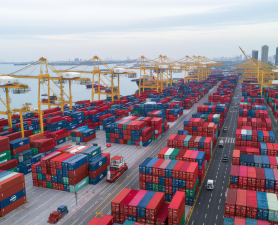
In the shipping industry, which handles over 80% of global trade, data has evolved from a "supplementary reference" to a "core asset." Global maritime trade volume is projected to exceed 12.8 billion tons by 2025. The Asia-Europe route saw 65% of vessels detouring around the Cape of Good Hope due to the Red Sea crisis, while freight rates on the Southeast Asia-Eastern US route soared due to industrial relocation. Behind these market fluctuations, foreign trade shipping data is becoming a "digital compass" for businesses navigating uncertainty. From cost control for cargo owners to capacity allocation for shipping companies, from port efficiency optimization to government policy-making, the in-depth application of shipping data has become a core indicator for measuring the competitiveness of market participants.
-
Against the backdrop of a global economic recovery intertwined with geopolitical competition, the foreign trade sector is undergoing profound changes. Traditional trade models are rapidly iterating, with digitalization, greening, and regionalization becoming core driving forces. The global export trade landscape is projected to shift dramatically by 2025, with emerging markets in Southeast Asia and Latin America leading the growth, and demand for smart home appliances and cosmetics surging. The RCEP agreement lowers trade barriers, but caution is needed regarding exchange rate fluctuations and cultural differences; deep localization is key to breaking through existing barriers. Global trade is undergoing structural changes, with emerging markets becoming the core engine of export growth. This trend has evolved from short-term fluctuations to a long-term reshaping of the landscape. The Global South (mainly referring to developing countries and emerging economies) is becoming a key force driving trade growth, contributing over 80% to global trade, and its share of trade volume continues to increase.
-
Since the end of World War II, the world economy has developed towards systematization and institutionalization, driving international trade to grow at an unprecedented pace. Global merchandise exports increased from $58.6 billion in 1949 to $16 trillion in 2015. As the world continues to progress, the global trade landscape is increasingly influenced by technology and sustainable development. The adoption of artificial intelligence and the growth of green technologies are not merely trends, but are becoming important pillars of trade strategies. These factors, combined with strong geopolitical strategies and economic policies, will determine the speed and direction of global trade growth in the coming years.
-
In recent years, economic globalization has faced headwinds, trade protectionism, and escalating geopolitical competition, profoundly altering the global industrial and supply chain landscape. The layout of industrial and supply chains in various countries has shifted from prioritizing cost, efficiency, and technology to prioritizing security, stability, and politics, exhibiting characteristics of diversification and regionalization, with a trend towards further fragmentation. This has thus curbed global economic growth momentum and added more uncertainty to economic recovery. Currently, the international community should uphold open cooperation, seize the new opportunities of digital transformation, and reconstruct a global industrial and supply chain division of labor system that balances efficiency, security, and resilience. The global supply chain is undergoing profound restructuring, moving from a focus on efficiency to a balance between security and efficiency.
-
Global trade data in 2025 acts like a prism, reflecting the complexity, resilience, and structural contradictions of the current global economic system. It's not simply a collection of numbers, but an interactive graph composed of multi-dimensional information such as exports, imports, prices, quantities, currency values, regional distribution, and industry composition. Only by observing this information within the dimensions of time series, geographical regions, and the structure of goods and services can we truly understand the meaning of global trade, as well as a country's position and changing trends in the international division of labor.
-
The global trading system is undergoing unprecedented transformation. This transformation is not the result of a single event, but rather the product of the interplay of multiple forces. Technological advancements, shifts in the geopolitical landscape, climate and energy transitions, the redesign of global value chains, and the rise of digital trade rules are collectively shaping a more complex and diverse trading world. Understanding this transformation requires examining it from four dimensions: structure, driving forces, impacts, and responses.
-
Traditionally, trade has primarily occurred between developed and developing countries, but direct trade between emerging economies is now growing rapidly, and regional economic blocs are becoming increasingly important. "Digital trade," including e-commerce, cloud services, digital payments, and cross-border data transfer, is rapidly becoming a new pillar of global trade. Especially since the COVID-19 pandemic, electronic transaction models have dominated both B2C and B2B transactions and are closely linked to logistics and finance. On the other hand, due to increasing awareness of data sovereignty among countries, differences in privacy protection laws, and relatively lagging international rule-making, global trade is showing new development trends amidst the current setbacks in globalization. Regionalization and bilateralization are gradually emerging, becoming new drivers of trade development. This trend not only provides countries with more trade options but also injects new vitality into the stable growth of global trade.
-
In the wave of globalization, tariff policies are a double-edged sword, protecting domestic industries while disrupting the stability of global supply chains. When traditional sea and air transport routes face uncertainty due to tariff barriers, railway routes, especially the China-Europe Railway Express, are gradually becoming a crucial force in reshaping global supply chains due to their unique advantages. Railways, with their inherent stability, economy, and sustainability, are building a "strategic buffer" against trade risks.
-
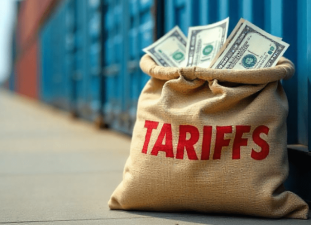
With the introduction of new tariffs and trade restrictions, business executives must assess all possible scenarios to ensure their companies can both minimize risks and capitalize on new opportunities. Whether it manifests as global supplier diversification, inventory management, and/or price adjustments, executives across industries must prepare for changes that will redefine the competitive landscape for decades to come. The global tariff war initiated by the Trump administration continues to escalate. Tariff wars have a significant impact on the global economy, disrupting the stability of global industrial and supply chains. Due to the highly specialized division of labor in global industry, the production of many products requires cooperation from multiple countries. Tariff wars hinder the flow of raw materials and components, increasing production costs and reducing efficiency. Simultaneously, tariff wars can trigger a contraction in global trade, impacting global economic growth. According to research reports from international economic organizations, during periods of severe tariff wars, global trade volume declined significantly, and the global economic growth rate also decreased accordingly.
-
Currently, the global economy is at a critical juncture of profound adjustment and accelerated evolution, and the international economic and trade landscape is undergoing unprecedented restructuring. Simultaneously, the development of digital trade, green transformation, and global service trade has brought sustainable development opportunities to global trade. The global trade situation is complex and volatile, facing challenges such as rising protectionism, supply chain restructuring, and industrial transformation, while also harboring new opportunities from the rise of emerging markets and the deepening of regional trade agreements. Against this backdrop, the future global trade landscape may develop towards regionalization, digitalization, and high value-added goods and services trade, thereby leading to a profound adjustment in the global economic structure.