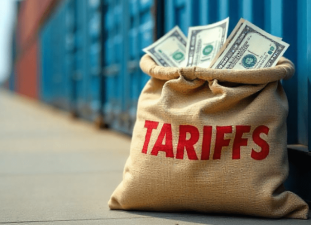
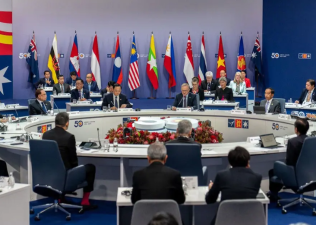
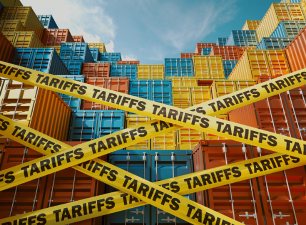
With the introduction of new tariffs and trade restrictions, business executives must assess all possible scenarios to ensure their companies can both minimize risks and capitalize on new opportunities. Whether it manifests as global supplier diversification, inventory management, and/or price adjustments, executives across industries must prepare for changes that will redefine the competitive landscape for decades to come. The global tariff war initiated by the Trump administration continues to escalate. Tariff wars have a significant impact on the global economy, disrupting the stability of global industrial and supply chains. Due to the highly specialized division of labor in global industry, the production of many products requires cooperation from multiple countries. Tariff wars hinder the flow of raw materials and components, increasing production costs and reducing efficiency. Simultaneously, tariff wars can trigger a contraction in global trade, impacting global economic growth. According to research reports from international economic organizations, during periods of severe tariff wars, global trade volume declined significantly, and the global economic growth rate also decreased accordingly.
Business Strategy Adjustments
Changes in Procurement Strategy:
To cope with increased tariffs, companies may adjust their procurement strategies, such as seeking alternative suppliers, increasing domestic procurement, or reducing imports.
Market Layout Adjustment:
Changes in tariff policy may affect a company's market layout. Companies may reassess the profit potential of different markets and adjust their sales strategies to adapt to the new tariff environment.
Enhanced Risk Management:
Increased tariffs bring more uncertainty, and companies may need to strengthen risk management, including exchange rate risk and supply chain risk.
Impact of Increased Tariffs on the Real Economy
Increased Costs:
Increased tariffs mean that consignees of imported goods or consignors of exported goods need to pay higher taxes, which directly increases the operating costs of businesses. For companies that rely on imported raw materials or components, increased tariffs may lead to higher production costs, thereby affecting the market competitiveness of their products.
Price Changes:
Increased tariffs often lead to higher prices for imported goods. This is because companies, in order to maintain profit levels, will pass on the increased tariff costs to consumers. Higher prices may affect consumers' willingness to buy, thus impacting market demand.
Market Competitiveness:
Increased tariffs may affect a company's market competitiveness. On the one hand, increased costs may lead companies to reduce investment in key areas such as R&D and marketing, thus affecting their long-term competitiveness. On the other hand, rising prices may cause consumers to switch to alternatives or domestic products, thereby weakening the market position of imported goods.
Supply Chain Adjustments:
Faced with increased tariffs, companies may consider adjusting their supply chain strategies. For example, finding new suppliers to reduce costs or increasing domestic procurement to reduce reliance on imported goods. These adjustments may require time and resources and could have a negative short-term impact on company operations.
International Trade Relations:
Tariff increases may also affect international trade relations. Increased tariffs may be seen as a form of trade protectionism and could trigger retaliatory measures from trading partners, such as increased counter-tariffs or trade barriers. This could lead to increased uncertainty in the international trade environment, adversely affecting companies' international trade operations.
Challenges Facing Global Economic Governance
How to reconcile the conflict between unilateralism and multilateral rules, how to balance supply chain security and efficiency, and how to safeguard the interests of developing countries in trade frictions. Historical experience shows that trade protectionism ultimately leads to a lose-lose situation—Greek exporters bluntly stated that "there are no winners in a trade war," and Brazilian coffee industry figures warned that American consumers will bear higher costs. In this sense, the US tariffs are not only a mistake in economic policy but also a test of governance wisdom in the era of globalization.
Conclusion
The Trump administration's tariff policies have devastated the US stock market and plunged the global economy into crisis. It is hoped that the US government will recognize the seriousness of the problem as soon as possible, stop its actions in time, and return to normal trade practices. After all, in the wave of economic globalization, no country can remain unaffected; cooperation and win-win outcomes are the future direction.