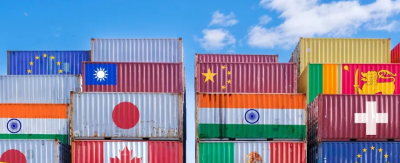
Currently, the global economy is at a critical juncture of profound adjustment and accelerated evolution, and the international economic and trade landscape is undergoing unprecedented restructuring. Simultaneously, the development of digital trade, green transformation, and global service trade has brought sustainable development opportunities to global trade. The global trade situation is complex and volatile, facing challenges such as rising protectionism, supply chain restructuring, and industrial transformation, while also harboring new opportunities from the rise of emerging markets and the deepening of regional trade agreements. Against this backdrop, the future global trade landscape may develop towards regionalization, digitalization, and high value-added goods and services trade, thereby leading to a profound adjustment in the global economic structure.
Multilateral Mechanisms and Regional Cooperation
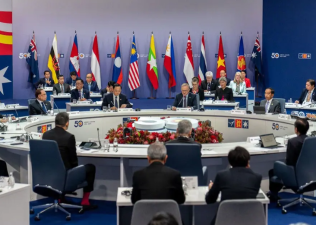
The Evolution of Multilateral Mechanisms and Regional Cooperation. Traditional multilateral governance frameworks dominated by the West, such as the WTO and IMF, are facing increasing challenges. Regional trade agreements have become a key factor in reshaping the global economic and trade landscape. Frameworks such as the CPTPP, RCEP, and USMCA have promoted the deepening of regional cooperation, forming new forces for cooperation. Although the BRICS countries have not yet established a traditional multilateral trade agreement or customs union, through institutional innovations such as the New Development Bank and the Contingent Reserve Arrangement, they play an increasingly important role in South-South cooperation and have had a positive impact on balancing the framework dominated by the US and the West.
Countries are strengthening their domestic economic interests through industrial policies. In October 2025, the New Zealand government announced significant changes to its government procurement rules, requiring all government agencies to consider the contribution of corporate proposals to the New Zealand economy in procurement reviews, with a weighting of at least 10%. Bidding companies that commit to prioritizing the hiring of local employees, providing vocational training, or procuring local supply chain resources will receive additional points in the review process.
Macroeconomic Background: Asia Leads Recovery, Global Divergence Intensifies
Moderate Global Economic Recovery, Stabilizing Growth but Insufficient Momentum
The global economy is projected to grow by 3.2% in 2025, with Asian economies becoming the main growth engines. India, Vietnam, and the five ASEAN countries are expected to grow by 7%, 6.1%, and 4.5% respectively, while developed economies such as the Eurozone are expected to grow by only 1.1%, with Germany even lower at 0.2%. The "scarring effect" of the pandemic (such as high debt and supply chain restructuring) continues to constrain growth potential.
Divergent Trends in Trade and Investment
Global trade is showing regional characteristics, with strong Asian export growth (projected at 7.4%), while EU exports may decline by 1.4%. While cross-border investment (FDI) has rebounded from its slump, its flow is concentrated in strategic industries such as semiconductors and new energy, and tax haven data distorts actual growth.
The Dual Impact of Geopolitics and Protectionism
The US's "friendly outsourcing" policy is driving supply chain restructuring, with Mexico and Southeast Asia absorbing some of the relocation; geopolitical risks such as the Russia-Ukraine conflict and the Middle East situation are exacerbating volatility in energy and food supply chains.
Core Contradiction: Intertwined Challenges and Opportunities
Challenges: Triple Pressures Exacerbate Market Fragmentation
US Tariff Escalation and Trade Barriers
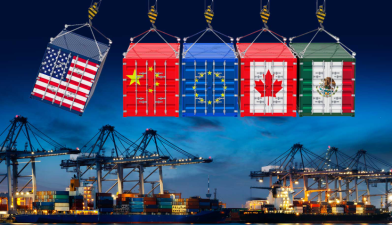
The Trump administration plans to impose tariffs of 10%-20% on Chinese goods. If combined with existing tariffs, the total tariff on some goods could reach 60%. It is estimated that this move could reduce China's exports to the US by 10%-20% and accelerate the relocation of supply chains to Mexico and Southeast Asia. In addition, the US is imposing "reciprocal tariffs" on products such as steel, aluminum, and chips, pushing up global trade costs.
EU Carbon Tariffs Fully Implemented
Starting in 2026, the EU Carbon Border Adjustment Mechanism (CBAM) will be officially implemented, covering industries such as steel, aluminum, and cement. Related Chinese export companies will face additional costs. Taking steel as an example, based on the EU carbon price (approximately €80/ton), the cost per ton could increase by €550-629. Carbon tariffs may also expand their impact through "indirect emissions" rules, further squeezing the profits of energy-intensive industries.
Emerging Market Exchange Rate and Debt Risks
Under the Federal Reserve's tightening policy, currencies such as the Brazilian Real and the Mexican Peso are under pressure to depreciate, and capital outflows are intensifying. In early 2025, the Mexican Peso depreciated by 0.3% against the US dollar. Brazil was forced to raise interest rates to 14.25% to curb inflation, but high interest rates suppressed economic growth, resulting in a fiscal deficit of 10%.
Evolution of the International Economic Order
Focusing on eliminating the root causes of conflict, an idea is gradually gaining traction: promoting mutual market opening among countries and establishing a free trade system. Guided by this ideology, the international economic order, with free trade as its fundamental orientation, has continuously evolved, becoming a crucial guarantee for global stability and prosperity. The historic economic success of this period largely owes to the stable operation of the international trade system based on the rules of the General Agreement on Tariffs and Trade (GATT) and the World Trade Organization (WTO). The United States, as a key promoter of the post-war international economic order and multilateral trading system, has long benefited from this.
Future Trends in Global Trade
The Importance of Multilateralism
Faced with the new ecosystem and profound changes in global trade, we must recognize that the trend of economic globalization is irreversible. Despite challenges and obstacles, countries are actively seeking new development paths and cooperation opportunities. This transformation will not only bring new growth points to global trade but also promote the global economy towards a more sustainable and inclusive direction. Therefore, while safeguarding the multilateral trading system, we need to continuously innovate and adapt to new international economic and trade rules and trends to achieve the goals of common prosperity and sustainable development.
Innovation and Adaptation to New Rules
At this time of change, we should uphold the belief that multilateralism is the only way to address global challenges. Only by firmly upholding the multilateral trading system can we ensure the steady development of international economic and trade cooperation. This year marks the 30th anniversary of the World Trade Organization (WTO). As the cornerstone of international trade, the multilateral trading system centered on the WTO plays an irreplaceable role in promoting the healthy development of global trade and advancing human civilization.
Conclusion
The current reshaping of the global trade landscape reflects the deepening contradictions inherent in the capitalist world system. With the increasing organic composition of capital and declining average profit rates, developed countries are reconstructing the global system of exploitation through tariffs and trade protectionism, attempting to shift their own crises onto developing countries.
This restructuring of the global trade landscape is not the end, but the beginning of a new era. In this wave of change, only by proactively adapting and actively leading can we secure a favorable position in the future global trading system. The future of global trade will depend on the interplay between open cooperation and closed protectionism, and historical experience has already pointed us in the right direction.