Before a trend takes shape, forward-looking analysis using financial indicators can help identify potential signals of business change. Development trend indicators analyze historical trends through continuous data and provide a reference for financial forecasting. This methodology is also showing new characteristics in technological applications, such as the emphasis on multimodal integration and self-supervised learning in the development of AI large-scale models. In this era of information overload, companies possess massive amounts of financial data, and extracting valuable information from it is a challenge for many financial analysts. By analyzing long-term trends, we can identify potential problems or opportunities in business operations, thereby making more informed decisions.
-
-
Currently, the global economy is at a critical juncture of profound adjustment and accelerated evolution, and the international economic and trade landscape is undergoing unprecedented restructuring. Simultaneously, the development of digital trade, green transformation, and global service trade has brought sustainable development opportunities to global trade. The global trade situation is complex and volatile, facing challenges such as rising protectionism, supply chain restructuring, and industrial transformation, while also harboring new opportunities from the rise of emerging markets and the deepening of regional trade agreements. Against this backdrop, the future global trade landscape may develop towards regionalization, digitalization, and high value-added goods and services trade, thereby leading to a profound adjustment in the global economic structure.
-
When market demand for a company's products or services increases, the company's sales will rise accordingly, leading to profit growth. For example, as people become more health-conscious, the demand for fitness equipment and health foods continues to increase, and the profits of related companies also grow. Conversely, if market demand declines, a company's sales and profits may be negatively affected. Cost control is another key factor affecting profits. A company's costs include production costs, sales costs, and management costs. In the financial fund sector, profit is a core concept, reflecting the operating results and profitability of a company or investment project. Simply put, profit is the operating result of a company during a specific accounting period; it is the remaining amount after deducting costs and expenses from revenue. It is an important indicator for measuring a company's economic efficiency and market competitiveness, and a key basis for investors to assess company value and investment returns. Profit is crucial for a company's survival and development. In the short term, sufficient profit can guarantee the company's daily operations, pay employee salaries, and repay debts. In the long term, sustained profit growth can support activities such as expanded reproduction, research and development innovation, and market expansion, enhancing the company's core competitiveness and market position. For investors, profit is a crucial factor determining investment returns. Increased corporate profits typically drive up stock prices, resulting in capital gains for shareholders. Simultaneously, companies may distribute a portion of their profits as dividends, providing cash returns.

-
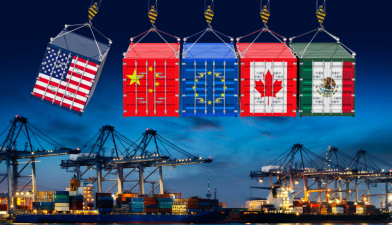
With the introduction of new tariffs and trade restrictions, business executives must assess all possible scenarios to ensure their companies can both minimize risks and capitalize on new opportunities. Whether it manifests as global supplier diversification, inventory management, and/or price adjustments, executives across industries must prepare for changes that will redefine the competitive landscape for decades to come. The global tariff war initiated by the Trump administration continues to escalate. Tariff wars have a significant impact on the global economy, disrupting the stability of global industrial and supply chains. Due to the highly specialized division of labor in global industry, the production of many products requires cooperation from multiple countries. Tariff wars hinder the flow of raw materials and components, increasing production costs and reducing efficiency. Simultaneously, tariff wars can trigger a contraction in global trade, impacting global economic growth. According to research reports from international economic organizations, during periods of severe tariff wars, global trade volume declined significantly, and the global economic growth rate also decreased accordingly.