Since the 2008 global financial crisis, the speed, direction, composition, and main actors of cross-border capital flows have undergone structural changes, characterized by a slowdown in the growth rate of global cross-border capital flows, an increase in the proportion of portfolio investment flows, and a greater role for non-bank financial institutions in cross-border funding intermediaries. In the post-pandemic era, the global interest rate hike cycle and the development of domestic financial markets have further led to short-term outflows and long-term inflows of cross-border capital into emerging economies, respectively. During this period, while cross-border capital flows have broadened the sources of funds and investment structures in emerging market countries and improved the efficiency of their financial systems, they have also increased the risk exposure of various countries to changes in the external financial environment. This is manifested in the increased frequency of abnormal capital fluctuations caused by the increased proportion of portfolio investment and the increased financial vulnerability due to the procyclicality of non-bank financial sector lending.
Developed Economies: An Investment Attraction Field Driven by Maturity and Innovation
International long-term capital investment in developed economies acts like a precise pointer, accurately targeting mature industries and high-tech sectors. In Europe, Germany, with its deep industrial foundation, has become a hotbed for global capital. Germany's automotive manufacturing and high-end machinery equipment industries, with their outstanding technological strength and strong brand influence, continuously attract a large influx of long-term capital. Taking Volkswagen as an example, its R&D progress and production line expansion projects in the new energy vehicle sector have attracted much attention. Ford Motor Company decisively participated through equity investment. This move not only provided Ford with valuable opportunities for technological cooperation, allowing it to absorb Volkswagen's cutting-edge technologies in the new energy field, but also enabled it to successfully expand its business footprint by leveraging Volkswagen's mature market channels in Europe, sharing in the substantial profits brought by Volkswagen's booming development in the new energy vehicle sector. Meanwhile, SoftBank Group of Japan took a different approach, providing Volkswagen with crucial R&D funding through bond financing. Furthermore, SoftBank Group fully utilized its expertise in artificial intelligence to collaborate with Volkswagen in developing intelligent driving assistance systems, injecting new vitality into the development of automotive intelligence and propelling the automotive industry into a new stage of development.
In North America, the US technology industry shines like a bright star, becoming a hotbed for long-term global capital investment thanks to its unparalleled innovation capabilities and strong market competitiveness. Tech giants such as Apple and Microsoft act like magnets, continuously attracting long-term global capital. The Saudi Arabian Public Investment Fund (PIF) made a large-scale investment in Apple Inc., which yielded not only equity returns but also paved the way for a deep collaboration with Apple to conduct digital technology training programs in Saudi Arabia. Through this cooperation, Saudi Arabia has been able to promote the cultivation of local technology talent, laying a solid foundation for the development of its domestic technology industry, while also fostering the exchange and integration of technological cultures between different regions.
Furthermore, the financial markets of developed economies, with their high liquidity and sound regulatory systems, have become ideal destinations for international long-term capital asset allocation. The US stock and bond markets are extremely active, with the New York Stock Exchange ranking among the world's top in both stock trading volume and bond financing scale, demonstrating strong market vitality and attractiveness. European stock and bond markets are equally attractive. The London Stock Exchange, with its high degree of internationalization, attracts numerous international companies to list, becoming an important platform for global capital convergence; the Frankfurt Stock Exchange has unique advantages in financial derivatives trading, providing diversified investment options for international long-term capital and meeting the risk preferences and return needs of different investors.
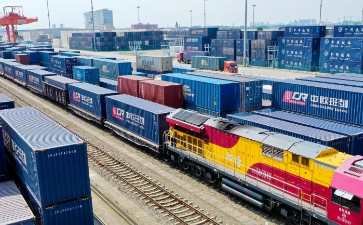
The Importance of Cross-Border Logistics Tracking
Implementation Principles
The realization of cross-border logistics tracking relies on a sophisticated and efficient information system. This system integrates various logistics resources and technologies to achieve real-time monitoring and tracking of the entire goods transportation process. Its core lies in the collection, transmission, processing, and display of logistics information, ensuring that both buyers and sellers can understand the status of goods in transit in a timely and accurate manner.
Information Collection and Transmission
Information collection devices are deployed at each key stage of the logistics chain, such as warehouse receiving, cargo packing, port arrival, customs clearance, and last-mile delivery. These devices scan barcodes or QR codes to bind package information, geographical location, and time in real time. The scanned data is directly transmitted to a central database via the internet, enabling instant information updates and sharing.
User Inquiry and Display
Users do not need to pay attention to the specific operations of the logistics company. An efficient tracking system gathers data from all parties to provide users with a coherent logistics trajectory. Users only need to enter the tracking number to obtain detailed timeline information on the query interface.
Value Realization
Enhanced Trust and Experience
Its value far exceeds the simple function of "checking location." For buyers, being able to view the package location in real time effectively alleviates waiting anxiety and enhances shopping confidence. For sellers, transparent logistics information demonstrates service professionalism and helps improve store reputation and customer satisfaction.
Optimize Supply Chain Management
Logistics data is extremely valuable to businesses. By analyzing historical logistics information, companies can assess the timeliness and stability of various logistics channels, identify transportation bottlenecks, and provide strong support for future logistics choices and management, thereby optimizing overall supply chain efficiency.
Handle Anomalies
International shipping involves long distances and complex processes, inevitably leading to unexpected issues such as package delays and customs clearance problems. Real-time tracking systems help businesses promptly detect these anomalies. If logistics information remains unupdated for an extended period or displays abnormalities, businesses can quickly contact logistics service providers for assistance, preventing further losses.
Accelerate Cash Flow
In cross-border trade, the transit time of goods directly impacts cash recovery. Accurate logistics information, especially the "delivered" status, is crucial for sellers to receive payments or for platform settlements. Clear logistics tracking reduces payment disputes caused by unclear cargo status and accelerates cash flow.
Global Capital Flows
Globally, industrial and logistics assets have been the most active sectors over the past 24 months. → In Europe, the Middle East, and Africa (EMEA), industrial and logistics assets slightly outperformed long-term rental apartments but lagged behind office buildings.
- In the Asia Pacific (APAC) region, industrial and logistics assets were almost tied for first place with office buildings.
- In North America, industrial and logistics assets followed closely behind long-term rental apartments, further highlighting the global popularity of this type of asset.
- Long-term rental apartments performed strongly in North America and Europe, the Middle East, and Africa, but their appeal was significantly reduced in the Asia Pacific region.
- Retail also held a considerable share in all regions.