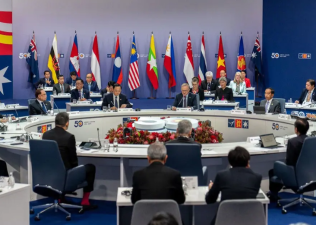
In recent years, economic globalization has faced headwinds, trade protectionism, and escalating geopolitical competition, profoundly altering the global industrial and supply chain landscape. The layout of industrial and supply chains in various countries has shifted from prioritizing cost, efficiency, and technology to prioritizing security, stability, and politics, exhibiting characteristics of diversification and regionalization, with a trend towards further fragmentation. This has thus curbed global economic growth momentum and added more uncertainty to economic recovery. Currently, the international community should uphold open cooperation, seize the new opportunities of digital transformation, and reconstruct a global industrial and supply chain division of labor system that balances efficiency, security, and resilience. The global supply chain is undergoing profound restructuring, moving from a focus on efficiency to a balance between security and efficiency.
Changes in Market Demand
Consumer demand is becoming increasingly diversified. Previously, consumers might have been satisfied with basic product functions; now, they want personalized products. For example, with mobile phones, people used to only require the ability to make calls and send text messages; now, they demand powerful camera functions, stylish designs, and smooth operating systems. This diversified demand forces companies to re-examine their supply chains, as the old model of mass-producing standardized products is no longer suitable.
Demand volatility is also significant. Like some fashion products, an outfit might become an instant hit after a celebrity wears it, causing a surge in demand. However, this hype can quickly fade, and demand can plummet. If a company's supply chain cannot adjust rapidly, it will face problems such as inventory buildup or stockouts.
Technological Drivers
Development of Information Technology.
The internet allows information to spread extremely quickly, making it easier for companies to obtain information from upstream and downstream businesses. For example, companies can promptly grasp information such as supplier inventory levels and production capacity, making supply chain restructuring possible. Furthermore, the rise of e-commerce has changed sales models, requiring companies' supply chains to adapt and be able to process orders and deliver goods quickly.
Advances in Logistics Technology.
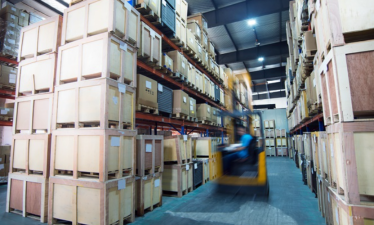
More advanced warehouse management systems and transportation tools are now available. For example, automated warehousing can improve the efficiency of goods storage and retrieval. This allows companies to redesign their logistics and distribution networks and optimize their supply chains.
Global Corporate Performance
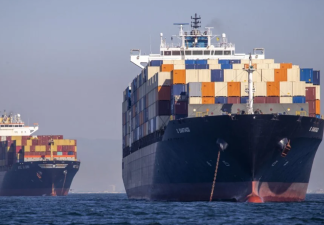
Global companies are also restructuring their supply chains by increasing the number of suppliers to reduce risk. Countries such as Vietnam, Mexico, India, the UAE, and Brazil are gradually becoming important trade hubs. These countries not only help mitigate trade risks but are also seen as key to addressing gaps created by global conflicts. Furthermore, approximately 40% of companies are increasing their sourcing from the US, 32% are adopting dual supply chain strategies, and "friendship outsourcing" strategies are gaining attention. These initiatives reflect a trend of businesses enhancing resilience in the face of uncertainty through diversified sourcing and supply chain restructuring.
Main Directions of Supply Chain Restructuring
Regionalization and Localization:
To reduce risk, companies are gradually decreasing their dependence on a single country or region, promoting diversified layouts.
Industrial Chain Relocation:
Some labor-intensive manufacturing is shifting to Southeast Asia and South Asia, while high-end manufacturing is concentrating in regional centers.
Intelligentization and Digitalization:
Blockchain, big data, and AI play a core role in supply chain visualization and predictive management.
Green and Low-Carbon Transformation:
In the context of carbon neutrality, green transportation and environmentally friendly packaging are becoming increasingly common.
Development of Supply Chain Finance:
Solving the financing difficulties of SMEs in the supply chain through financial instruments.
Conclusion
The restructuring of global supply chains is an inevitable trend, not only an operational adjustment for enterprises but also a significant opportunity for capital markets. From regionalization and intelligentization to green and low-carbon development and financial empowerment, changes in supply chains are shaping a new economic landscape. For investors, grasping the new trends brought about by supply chain restructuring not only allows them to capture the dividends of industrial chain relocation in the short term, but also enables them to share in the value-added brought about by the optimization of the global industrial landscape in the long term.