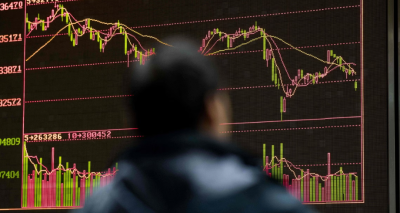
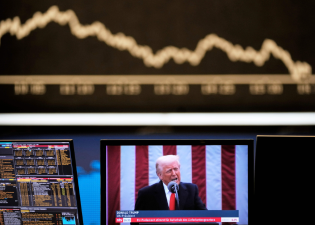
Against the backdrop of an increasingly complex global economic landscape, we have noticed a growing number of investors fleeing the US financial markets, leading to unprecedented challenges for dollar assets. Capital flows are a crucial and closely watched issue in the global economy. Understanding and discerning capital flows is of great significance for investors and financial professionals. It not only helps us grasp market dynamics but also provides a reference for investment decisions. Over the past few decades, globalization has accelerated, and cross-border capital flows have become one of the main characteristics of the world economy today. How should we view the current global changes amidst the undercurrents of capital and the foreshadowing of the times?
Where are they flowing?
Loss of Confidence in Dollar Assets
A growing number of analysts believe that the recent sell-off of US Treasury bonds and the weakness of the dollar are due to investors' distrust of the overall performance of the US economy. The surge in US Treasury yields, especially the 10-year Treasury yield reaching 4.45%, is the largest increase since 2001. All of this has sounded alarm bells for the market, foreshadowing potential risks to the US economy.
Investors are abandoning the US for Europe, flowing into more stable assets. The US dollar fell to a 10-year low against the Swiss franc, while the euro performed exceptionally well, with its exchange rate against the dollar showing a remarkable 300-point increase in recent trading. All of this indicates that confidence in the dollar in capital markets is rapidly waning.
The Euro's Strong Rebound
The euro's strong rebound has become a major highlight as capital flows towards safe-haven assets. Market data shows that the continued appreciation of the euro against the dollar means that more and more investors are shifting funds to the Eurozone. More importantly, the Eurozone bond market has maintained relative stability compared to the US bond market amidst increasing risks. This is clearly evident in the comparison of German and US bond yields.
Investors believe that the euro can not only benefit from the setbacks in the US market but may even completely reverse its recent downward trend in the international market. Clearly, this rebound is inseparable from investors' "structural restructuring," or an expectation of future economic prospects.
The Reshaping of Gold's Value
Meanwhile, the enthusiasm from the gold market should not be underestimated. With the large influx of safe-haven funds, spot gold prices have repeatedly hit new highs, reaching a peak of $3220 per ounce. Gold, as a traditional safe-haven asset, has undoubtedly become a top choice.
According to RSM Chief Economist Joseph Brussulas, the root cause of global market volatility lies in distrust of US policy. Facing the looming risk of economic recession, investors are increasingly reliant on safe-haven assets like gold.

A Global Debt Crisis Looms
The latest report from the Institute of International Finance (IIF) shows that global debt has reached $307 trillion, with the debt-to-GDP ratio rising to 336%. Interest payments on US government debt are projected to exceed $1 trillion by 2025, accounting for 19.7% of fiscal revenue, approaching the 20% warning line. Data from the Bank of Japan shows that despite record-high household financial assets, cash deposits still account for 53.2%, indicating persistently low risk appetite.
Calculations by the Ifo Institute in Germany suggest that a new round of stimulus measures in Europe could push up the Eurozone's debt ratio by 15 percentage points. Of particular note is that, according to S&P Global Ratings, approximately 23% of global investment-grade bonds are at the "BBB" threshold. A 1 percentage point increase in interest rates could trigger approximately $2.3 trillion in rating downgrades.
Future Investment Trends Outlook
As more investors choose to diversify their asset allocations and avoid the US dollar and its derivatives markets, what directions will future investment trends take? The recent continuous increase in gold holdings suggests that central banks may further accelerate asset diversification to cope with the ever-changing international market environment.
Furthermore, due to a weak dollar and a volatile US Treasury market, global investors' risk appetite will further change, meaning that the demand for safe-haven assets will become increasingly strong. This shift will undoubtedly lead global capital flows to new heights.
In summary, global capital flows reflect deep concerns about the US economy and foreshadow a transformation in the international financial landscape. In this upheaval, investors' preference for assets such as the euro, Swiss franc, and gold is likely to trigger more market dynamics and changes. These changes will not only affect investors' wealth choices but will also impact the future prospects of the global economy and finance. This article aims to provide investors with a clearer perspective in complex markets, helping them make more informed investment decisions.
In an increasingly complex global economic and financial environment, how can investors understand evolving market trends? Are you ready to embrace this transformation in capital flows?