logo
  • Home
  • Investor Insight
  • Market Moves
  • Global Economy
  • Finance Radar
  • Money Matters
  • Trade&Trends
logo
search
search

Why Are Markets So Volatile Right Now?

2025-11-30

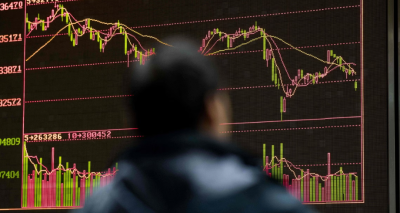
In 2025, global stock markets continued to fluctuate, with A-shares, US stocks, and Hong Kong stocks all experiencing varying degrees of volatility. Investors are generally concerned about: Why the recent stock market volatility? What are the key factors behind the market fluctuations? Faced with uncertainty, how should retail and institutional investors adjust their strategies? This article will analyze the reasons for the current stock market volatility from multiple perspectives, including macroeconomics, policy adjustments, market sentiment, and capital flows, and provide practical investment advice to help investors seize opportunities and avoid risks in a volatile market. Volatility is a common phenomenon in financial markets. The reasons for market volatility are diverse, and a deep understanding of these reasons is crucial for investors to formulate effective coping strategies.


Key Characteristics of Recent Stock Market Volatility

Since 2025, global stock markets have exhibited characteristics of "alternating rises and falls, and accelerated sector rotation":
  1. A-share Market:
        The Shanghai Composite Index fluctuated between 3200 and 3500 points, with increased volatility in growth stocks such as new energy and semiconductors, while defensive sectors such as banking and consumer goods performed relatively steadily.
  2. US Stock Market:
         The Nasdaq index was influenced by tech company earnings reports, with daily fluctuations exceeding 2% multiple times. Expectations regarding Federal Reserve policy remain a market focus.
  3. Hong Kong Stock Market:
        The Hang Seng Index experienced significantly increased volatility due to foreign capital flows, with divergent trends between the internet and real estate sectors.
This increased volatility reflects market concerns about the pace of economic recovery, the direction of monetary policy, and geopolitical risks.

What are the driving factors behind rising stock prices?
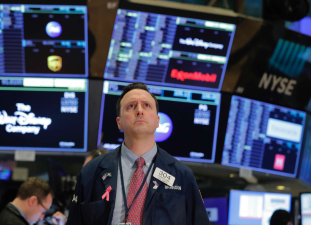
For fundamental investors, from a long-term perspective, the most important source of market returns is the value creation of listed companies themselves. However, in the relatively short term, or in different market phases, what are the driving factors behind rising stock prices? We attempt to explain the driving factors of stock prices using modern financial theory: Stock Price = Price-to-Earnings Ratio * Earnings Per Share (P = PE * E)
That is, stock prices can be broken down into two parts: earnings and valuation. Valuation fluctuations are the most important factor driving market volatility, characterized by: valuation increases during periods of hope, earnings increases during periods of growth, and valuation increases during periods of optimism. Liquidity is a significant driver of valuation fluctuations.


Investment Strategies in a Volatile Market

  1. Diversify Investments to Reduce Risk of Single Assets
Balance Between Stocks and Bonds: Allocate a portion to government bonds and corporate bonds to hedge against stock market volatility.
Sector Rotation: Avoid over-concentration in any one sector; focus on defensive sectors such as consumer goods, pharmaceuticals, and energy.
  1. Focus on High-Dividend, Undervalued Assets
Banks and Utilities: Stable cash flow and high dividend yields, suitable for conservative investors.
Dividend Index Funds: Such as the CSI Dividend Index Fund, offering stable long-term returns.
  1. Dollar-Cost Averaging Strategy to Smooth Market Volatility
Invest in index funds (such as the CSI 300 and S&P 500) using a regular fixed-amount investment method to reduce market timing risk.
  1. Control Position Size and Maintain Cash Flexibility
Maintain 30%-50% cash reserves during periods of high market uncertainty, waiting for better entry opportunities.
  1. Long-Term Perspective, Avoid Emotional Trading
Short-term fluctuations are difficult to predict, but the long-term value of quality assets will eventually return; avoid frequent trading.

Geopolitical Factors and Market Sentiment Fluctuations

  • The Russia-Ukraine conflict disrupts energy and food supply chains, exacerbating global inflation expectations.
  • US-China technology and trade tensions affect foreign investors' risk appetite for A-shares.
  • The rising VIX fear index indicates increased investor risk aversion.
Recent stock market volatility is influenced by both macroeconomic factors and policy adjustments, as well as market sentiment and capital flows. In the face of volatility, investors need to maintain a stable mindset, control risks, and seize opportunities. Through scientific asset allocation and a long-term perspective, they can achieve steady returns in a volatile market.
previous post
Economic Signals & Trend Insights
next post
How Do Economic Signals Shape Trends?

Related Articles

Global Economic Signals Explained

Global Economic Signals Explained

2025-11-30
Are Economic Trends Accelerating or Slowing?

Are Economic Trends Accelerating or Slowing?

2025-11-30
What Are Global Markets Telling Us?

What Are Global Markets Telling Us?

2025-11-30

Popular Posts

  • What Trade Data Reveals About the Global Economy

    What Trade Data Reveals About the Global Economy

  • How Geopolitics Is Changing Trade Flows

    How Geopolitics Is Changing Trade Flows

  • How Geopolitics Is Reshaping the Economy

    How Geopolitics Is Reshaping the Economy

  • Tracking Goods and Capital Across Borders

    Tracking Goods and Capital Across Borders

  • Financial Indicators That Matter Before Trends

    Financial Indicators That Matter Before Trends

About Us

Privacy Policy

Term Of Use

Copyright © 2025 Sound Finance. All rights reserved.

logo
  • Home
  • Investor Insight
  • Market Moves
  • Global Economy
  • Finance Radar
  • Money Matters
  • Trade&Trends
  • About Us
  • Privacy Policy
  • Term Of Use