The global economy has multifaceted impacts on daily life, profoundly altering lifestyles through channels such as the flow of goods, cultural exchange, employment opportunities, and technological advancements. Key benefits of economic growth to society include improved living standards, poverty reduction, provision of public services, promotion of technological progress, environmental sustainability, social stability, international influence, investment and capital accumulation, addressing population growth, and enhancing government fiscal capacity. Economic growth is not merely a quantitative increase but also requires qualitative improvement, focusing on productivity, innovation, resource efficiency, and social inclusion. Sustained and inclusive growth contributes to building a more prosperous, equitable, and sustainable society.
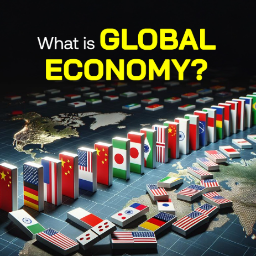
Economic globalization is a process that transcends national borders, involving trade, capital flows, technology transfer, service provision, and global interdependence and connections. This process facilitates the transnational flow of goods, technology, information, services, currencies, and people; in short, it tightly connects the world economy into a unified whole. Economic globalization is not only a key characteristic of the contemporary world economy but also a significant trend in global economic development.
The impact of economic globalization on individual lives can be categorized into several aspects:
Increased national welfare:
Globalization allows people access to more goods and services, thereby improving the convenience and comfort of life.
Meeting diverse national needs and preferences:
Through global trade, countries can offer diversified goods and services, satisfying the personalized needs of different consumers.
Improved national living standards:
Globalization promotes the dissemination of technology and knowledge, increases production efficiency, and creates more employment opportunities, thus raising people's living standards.
Influence on national culture and values:
Globalization brings about cultural exchange and integration, influencing people's values and lifestyles.
Creation of employment opportunities:
With the expansion of global trade and production, new employment opportunities are created, helping to reduce unemployment rates.
While economic globalization brings many benefits, it also carries risks. Globalization may lead to the spread of economic fluctuations, affecting national economic stability. Therefore, countries need to formulate appropriate policies to balance the advantages and disadvantages of globalization and ensure sustainable economic development.
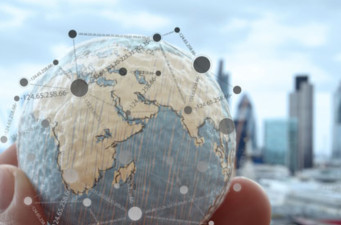
Understanding the Impact of Global Economic Growth on Daily Life
Global economic growth is a macroeconomic variable; changes there are often invisible but truly impact everyone's daily life. Like an invisible water pipe, the vitality of the supply side, the resilience of the demand side, and the sentiment of the investment side all permeate your household's daily expenses through price fluctuations, wage levels, and employment opportunities. When growth is robust, there are more job opportunities, moderate price increases, and relatively loose credit conditions; when growth slows, many seemingly independent expenditures are amplified and reordered, thus requiring a re-adjustment of household budgets.
The most direct transmission of global growth rates comes from the commodity market. When global demand is strong, commodity prices tend to rise, and the increase in prices of energy, metals, and food will be transmitted to daily consumer goods, increasing the pressure on household daily expenditures. Conversely, if global growth is weak, corporate investment decreases, and raw material and energy prices may fall. Short-term price declines in some commodities may present opportunities for price reductions, but they may also lead to overcapacity and employment instability. Regardless of whether prices rise or fall, consumer psychology is affected. In an uncertain environment, consumers tend to choose a more stable spending structure, and the preference for saving increases.
Economic globalization also brings some challenges and problems
First, economic globalization exacerbates the problem of income inequality. In the process of globalization, some developed countries and multinational corporations have gained more benefits, while some developing countries and vulnerable groups have faced greater pressure and hardship. This has led to a widening gap between the rich and the poor, exacerbating social inequality. Secondly, economic globalization has also brought environmental problems. With the increase in international trade, resource consumption and environmental damage have intensified. This has had a serious impact on our planet's environment, requiring our joint efforts to solve.
In conclusion
Economic globalization has had a profound impact on our lives. It has provided us with more consumption choices and employment opportunities, and promoted cultural exchange and integration. However, we must also face the challenges and problems brought about by economic globalization. We should actively address these issues and seek solutions to achieve the sustainable development of economic globalization, allowing it to better benefit our lives.