Where Is Global Growth Coming From Now?
Global economic growth is primarily driven by structural transformation in emerging markets, technological revolutions, the advancement of green energy and sustainable development, the restructuring of global supply chains, and the recovery of the service sector in developed economies. These factors combined to propel sustained global GDP growth. By 2025, global economic growth is projected to be led by Asia, driven by technology, and characterized by green transformation. Emerging markets will contribute 60% of global growth, AI and semiconductors will reshape industry value chains, and green investment will create new growth poles.

Global Growth
Technological Innovation
The development of technology, especially artificial intelligence and the digital economy, is becoming a crucial driver of global economic growth. Countries are promoting the development of high-tech industries to improve production efficiency and product quality, thereby achieving high-quality economic growth.
Policy Support
Government policy guidance plays a key role in economic growth. According to the International Monetary Fund's forecast, global economic growth is expected to remain between 3.2% and 3.3% in 2024 and 2025. The stability and effectiveness of policies will directly affect the speed and quality of economic recovery. In balancing inflation and economic activity, policymakers need to implement structural reforms to enhance the medium-term growth outlook.
Market Demand
Changes in global market demand also significantly impact economic growth. With the rise of emerging markets and developing economies, the drivers of global economic growth are shifting. Countries need to stimulate economic growth by boosting domestic demand and consumption, especially in the face of external uncertainties.
International Cooperation
Faced with global challenges such as climate change and geopolitical conflicts, countries need to strengthen cooperation to jointly address these issues and achieve sustainable and inclusive growth. Through international cooperation, countries can share resources, technologies, and markets, thereby promoting the common development of the global economy.
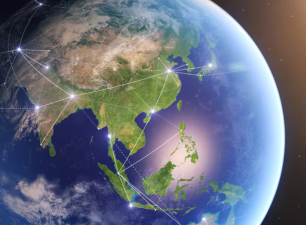
Technological Revolution: AI and Semiconductors Reshape the Global Industrial Landscape, with Significant Investment Multiplier Effects
AI-Driven Productivity Leap
Global investment in AI hardware is projected to reach $520 billion by 2025. US AI data center spending accounts for approximately 2% of GDP, directly contributing 0.7% to economic growth. The application of generative AI in fields such as healthcare and manufacturing increases labor productivity by 15%-20%. For example, one automaker reduced its defect rate from 5% to 0.5% through AI-based visual quality inspection, saving over 20 million yuan annually.
Strategic Restructuring of the Semiconductor Industry Chain
Global semiconductor equipment investment increased by 28%, with the US domestic production capacity share rising from 12% to 20%. TSMC's Arizona plant began mass production of 3nm chips. China promoted independent innovation through the "Chip and Science Act," achieving a 70% self-sufficiency rate for 14nm and above chips. Surge in semiconductor demand led to a recovery in South Korean exports to pre-pandemic levels, and SK Hynix's HBM3E production capacity accounts for 70% of the global total.
The Efficiency Revolution of Digital Infrastructure
Global 5G base stations reached 5 million, with China accounting for 60%. Industrial internet platforms connected over 80 million devices. Sany Heavy Industry reduced production line changeover time by 60% through 5G private networks. The application of edge computing in industrial scenarios reduced equipment fault warning response time from minutes to milliseconds, saving a machinery company over 10 million yuan in annual maintenance costs.
Trade frictions, debt risks, and technological monopolies constitute the main downward pressures. The key to future growth lies in:
- Emerging markets need to deepen structural reforms and improve total factor productivity;
- Developed countries need to balance technological monopolies with global cooperation to avoid "innovation silos";
- Global governance needs to strengthen trade rule coordination and build an inclusive growth framework.
In the long term, technological innovation and green transformation remain the core paths to breaking through growth bottlenecks, but geopolitical issues and debt problems may slow down the process.
previous post
Are Emerging Markets Gaining Momentum?
Related Articles