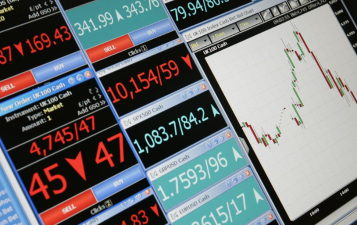
The Financial Stress Index (FSI) is a comprehensive index composed of a series of indicators reflecting the stress levels of various subsystems within the financial system. It can be constructed using methods such as factor analysis and credit weighting. The FSI effectively reflects the overall risk stress level of the entire financial system due to uncertainty and changes in expected losses. This index is composed of relevant indicators from a country's major financial markets and can be used as a continuous variable; its extreme values represent financial and economic crises. By constructing a comprehensive financial stress index including variables from asset markets such as banking, foreign exchange, stocks, and insurance, the FSI can effectively reflect the risk stress level of a country's financial system in real time, helping policymakers and market participants better assess the potential risks of the entire market. This provides important guidance for preventing financial crises and maintaining economic stability.
Construction Methods
Llling, et al. (2003) constructed a comprehensive financial stress index for Canada using three types of indicator variables: standard measures, refined measures, and GARCH variables. They employed four methods—the: the cumulative distribution function transformation method, factor analysis, equal variance weighting method, and credit weighting method—and conducted empirical tests. They found that the stress index obtained through factor analysis had a low correlation coefficient with indices obtained by the other three methods; moreover, the GARCH variable index did not effectively identify stress events. Furthermore, scholars Hakkio and Eref (2009) used principal component analysis to construct a composite index to identify financial stress conditions in the US sample period.
Macroeconomic Signals and Implications
Changes at the macroeconomic level often form the basis for other signals. If a country or region's economic growth continues to slow, consumption and investment decline significantly, and employment pressure increases, it often indicates that financial risks are accumulating. Specific manifestations include: a divergence between nominal and real growth, a decline in corporate investment, a drop in consumer confidence, and a slowdown or even a weakening of the upward trend in employment growth. Such signals do not directly equate to an impending crisis, but they foreshadow subsequent signals, indicating whether liquidity supply can effectively offset slowing demand, and requiring close attention to the central bank's monetary policy stance and the strength of its fiscal policy implementation.
The direction of interest rates and prices also conveys the same message: if inflation expectations are unstable and price level volatility increases, the central bank's policy space will be compressed. When inflation is high, tightening policies can easily lead to a further slowdown in economic activity; conversely, if inflation cools but the economy remains weak, it may trigger deflationary risks. The magnitude and speed of monetary policy adjustments, along with the economy's own resilience, jointly determine the evolution path of macroeconomic risks. Therefore, macroeconomic signals are not single-point indicators, but rather a comprehensive trend assessment.

The causes of financial stress are diverse:
- Economic cycle fluctuations: During economic recessions, declining corporate profits and insufficient market confidence amplify investment risks.
- Policy adjustments: For example, tightening monetary policy leads to higher interest rates and increased financing costs.
- External shocks: Geopolitical conflicts, natural disasters, or public health emergencies may trigger market panic and supply chain disruptions.
- Financial market factors: Financial repression phenomena such as interest rate controls, credit quota restrictions, or overvalued exchange rates can inhibit market function and accumulate potential risks. Financial Stress Coping Measures
Individuals can alleviate financial stress by adjusting consumption and savings habits, developing reasonable investment plans, and increasing income sources. Businesses can cope by optimizing operational decisions, strengthening risk management, and seeking diversified financing channels. Seeking professional financial advice is also an effective way to manage financial stress.
Conclusion
The combined effects of slowing global economic growth, marginal policy adjustments, and market volatility have placed multi-layered pressures on financial institutions such as banks, securities firms, and funds. The superposition of different stressors creates comprehensive challenges across dimensions such as returns, costs, risks, and governance. Understanding the structure and internal logic of these stressors helps to grasp the evolution of industry risks and allow for proactive responses at the governance and operational levels.